
Step 1 · Enquiry
Answering enquiries
The agent answers recurring questions with approved information. Personal matters go to your team with context.
AI automation
One step triggers the next, from enquiry to invoice. Your team types less, chases less and still keeps track of every case.
Discuss AI automationFree initial call by video · Directly with Victor Knapp
Why it matters
Typing up enquiries, entering appointments, writing confirmations: individually, these take minutes; together, they take time away from your actual work. And every manual transfer is a source of errors; even careful proofreading misses mistakes.1

Why at all
32 hours
a month is what a German SME spends on bureaucracy on average, around 7 % of working time. For the self-employed, it is 8.7 %.2
KfW SME Panel 2025, around 10,000 businesses in Germany. Average; half manage with no more than 15 hours.
Why now
26 %
of businesses in Germany with 10 or more employees used artificial intelligence in 2025. In 2023 it was 12 %; comparison with earlier years is limited (changed definition of enterprise from 2025).3
Federal Statistical Office of Germany. Smaller businesses are not included.
Why acessio
One step first.
We show you, using your own workflow, which steps can go, and build one of them first.
One example, six steps
This is how automations work together in a business with appointments, such as a workshop, a studio or a practice. You decide which steps you use.
already running in client projectscan be connected
From client projects: At Dr Herzberg's practice appointment selection and calendar are connected, and after the appointment the invoice is ready for approval (steps 2 and 4). At Privatpraxis Lindenthal confirmations and appointment reminders go out on their own (steps 2 and 3). Step 6 runs in other client projects.
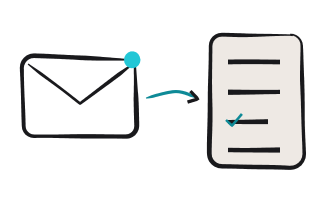
Can be connected: 1 · Enquiry
A customer writes via your website or on WhatsApp. Name, request and contact details end up complete in your customer list, without retyping.
 triggers

Already running in client projects: 2 · Appointment
The customer picks a free slot themselves. The appointment is in your calendar, and the confirmation goes out immediately.
triggers

Already running in client projects: 3 · Appointment reminder
A short message arrives before the appointment. Anyone who can't make it cancels in good time, and the slot becomes free again.
triggers

Already running in client projects: 4 · Invoice
After the appointment, it is prepared automatically from the appointment data. You check it briefly and approve it.
triggers

Can be connected: 5 · Accounting
Once the invoice is paid, the receipt is where your tax adviser needs it. If a payment is missing, a friendly reminder goes out.
triggers
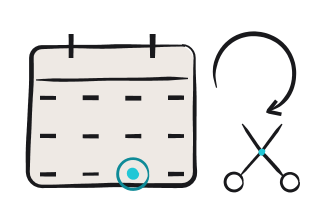
Already running in client projects: 6 · Review request and follow-up reminder
If you wish, a review request follows, and later, with consent, a follow-up reminder. Then the chain starts again at step 2.
AI agents
An automation follows fixed rules: if A happens, B follows. An AI agent understands and writes language. It answers questions, finds appointments and prepares texts, within the limits we set with you. You decide what it may send on its own and what you approve first.
Step 1 · Enquiry
The agent answers recurring questions with approved information. Personal matters go to your team with context.

Step 2 · Appointment
The agent helps customers find a suitable appointment, even after you've closed for the day.

Steps 4 to 6
Invoice texts, replies to reviews, reminders: the agent prepares, you approve. We agree the task, information and limits together.
A possible use, tailored to your business. The figures are illustrations and do not show real people.
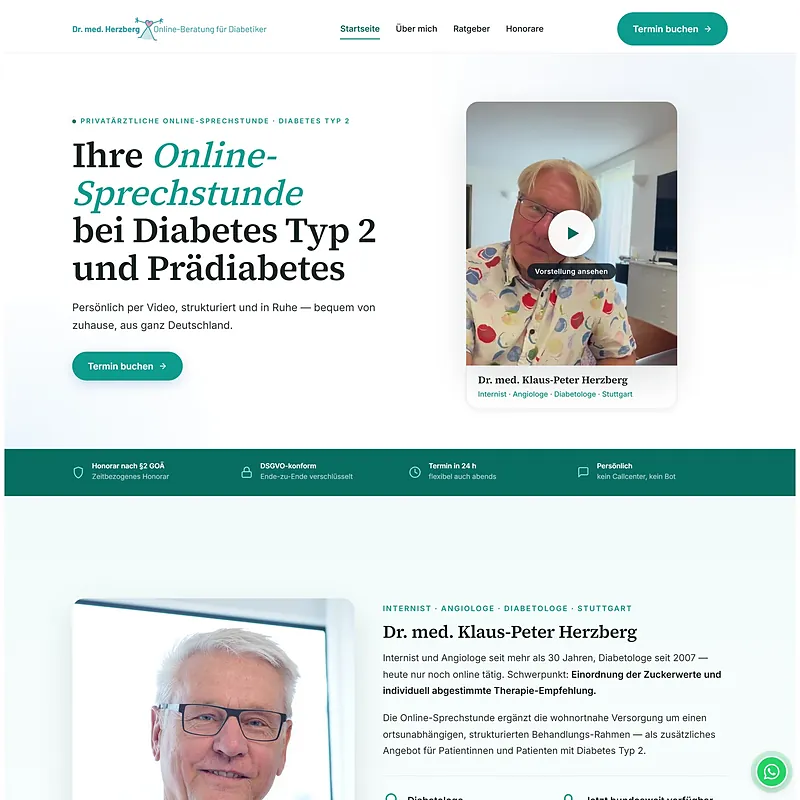
From a client project
The website connects appointment selection with the calendar. Patients receive the access link to the video consultation by email after booking. After the appointment, the invoice is prepared automatically and only needs to be approved.
“I was impressed by the knowledge he could draw on so readily to improve the website's functionality.”
Your project
We start with the step that costs you the most time, and only expand once it runs reliably.

We record triggers, required data, the software involved and the people responsible. From this we define a manageable first use case.
We implement the agreed handover and test typical cases. Existing software stays involved as long as it offers suitable interfaces or supported connections.
Missing details, duplicate entries or unavailable services must not disappear unnoticed. We agree what gets logged and who needs to step in.
Sounds like a fit for your business? Discuss AI automation → · or call: +49 152 562 013 06

Working together
You decide based on a concrete proposal.
You show us one recurring process from start to finish. We work out where time is lost or details are entered more than once.
We define a first process and check the technical options. You receive a proposal with prerequisites and responsibilities.
After testing and approval, the process is introduced. Documentation and agreed monitoring support day-to-day operation.

FAQ
We promise a verifiable connection between the software you already use. Where approval is needed, we define who gives it. We don't promise a blanket time saving, and we don't automate the whole business at once.
No. We first check what your existing software can do and where a connection makes sense.
Yes. A single, clearly defined process is often easier to test than a big overhaul. Further steps can follow from experience with that first process.
We define that in the concept: a visible error message, a responsible person and a practical manual fallback. How much safeguarding is needed depends on how important the process is.
Only within the limits we set with you. An agent answers recurring questions and prepares texts. Anything financially, legally or professionally sensitive is approved by you or your team.
That's up to you. An invoice can be sent fully automatically or, as at Dr Herzberg's, be prepared and wait until it is approved.
Your next step
Describe a workflow that repeats every week. In the free first call, we show you which step to start with. You know the scope and the cost before we begin.
Discuss AI automation
Victor Knapp
Your direct contact
+49 152 562 013 06

All sources accessed on 22 Oct 2026.